
Buildings with RAAC
Reinforced autoclaved aerated concrete, or RAAC, is a type of concrete used in the construction of certain buildings between the 1950s and 1980s.
Many public buildings, such as schools, colleges, hospitals, leisure centres, police stations and offices may contain RAAC, which is a particular concern for UNISON members who may work in these places.
It’s essential for UNISON members and reps to be able to identify potential hazards caused by RAAC in their workplace, and if necessary, ask their employer to carry out a risk assessment.
On this page
What is reinforced autoclaved aerated concrete (RAAC)?
Between the 1950s and 1980s, there was a need for quick low-cost solutions to build new public buildings, such as schools, colleges, hospitals, leisure centres, police stations and offices.
To meet this requirement, different ‘non-standard’ construction types where developed, which could be manufactured elsewhere, then transported to site for assemble. Reinforced autoclaved aerated concrete, or RAAC, was a type of concrete used in a lot of these buildings.
Unlike normal reinforced concrete, RAAC used very fine ingredients that when mixed together was designed to create small bubbles, helping to reduce its overall weight.
The mixture was poured into (plank shape) moulds, along with steel rods to help provide strength, then put into large, pressurised ovens (autoclaves) to speed up to drying and hardening time. This also helped to prevent the planks from shrinking, ensuring consistent sizing.
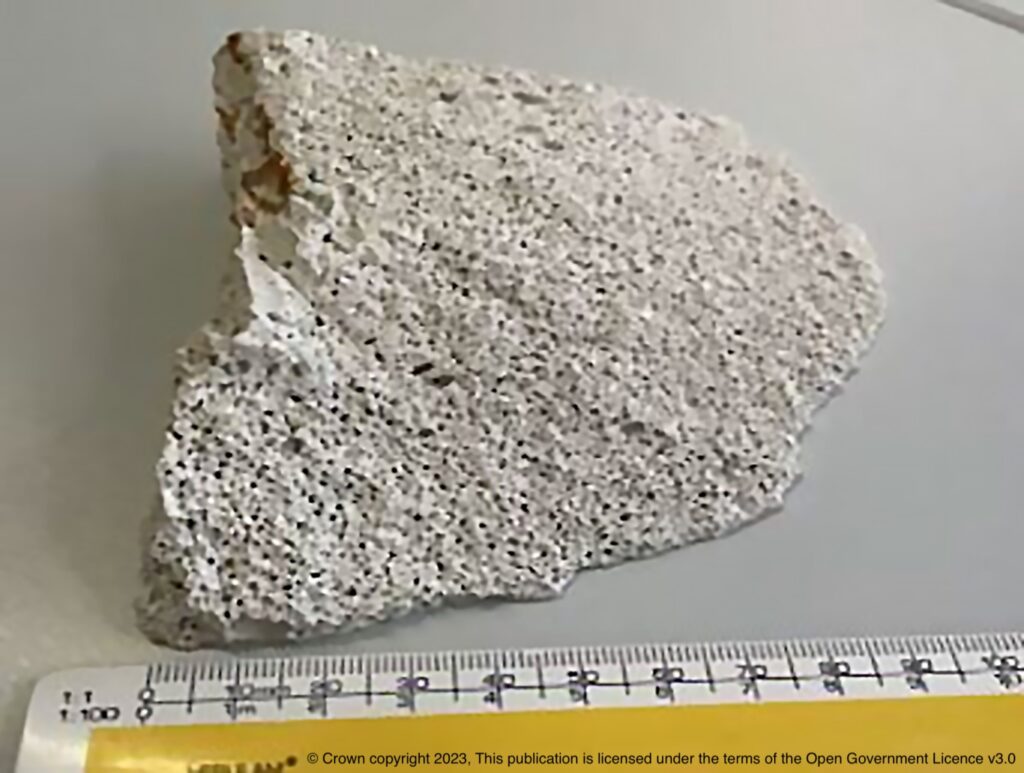
Below is a picture which shows a broken piece of RAAC, where the bubble-like structure can be seen.
In what type of buildings might RAAC have been used?
Many public buildings, such as schools, colleges, hospitals, leisure centres, police stations and offices, may have used RAAC in their construction or alterations.
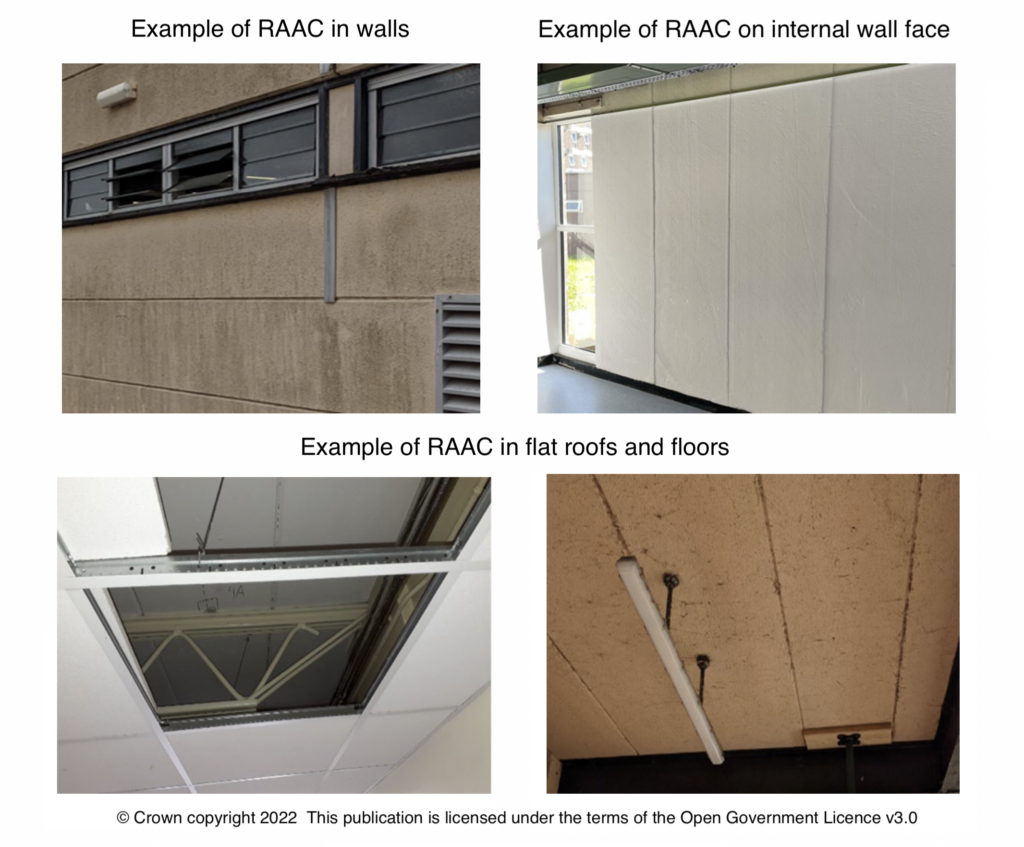
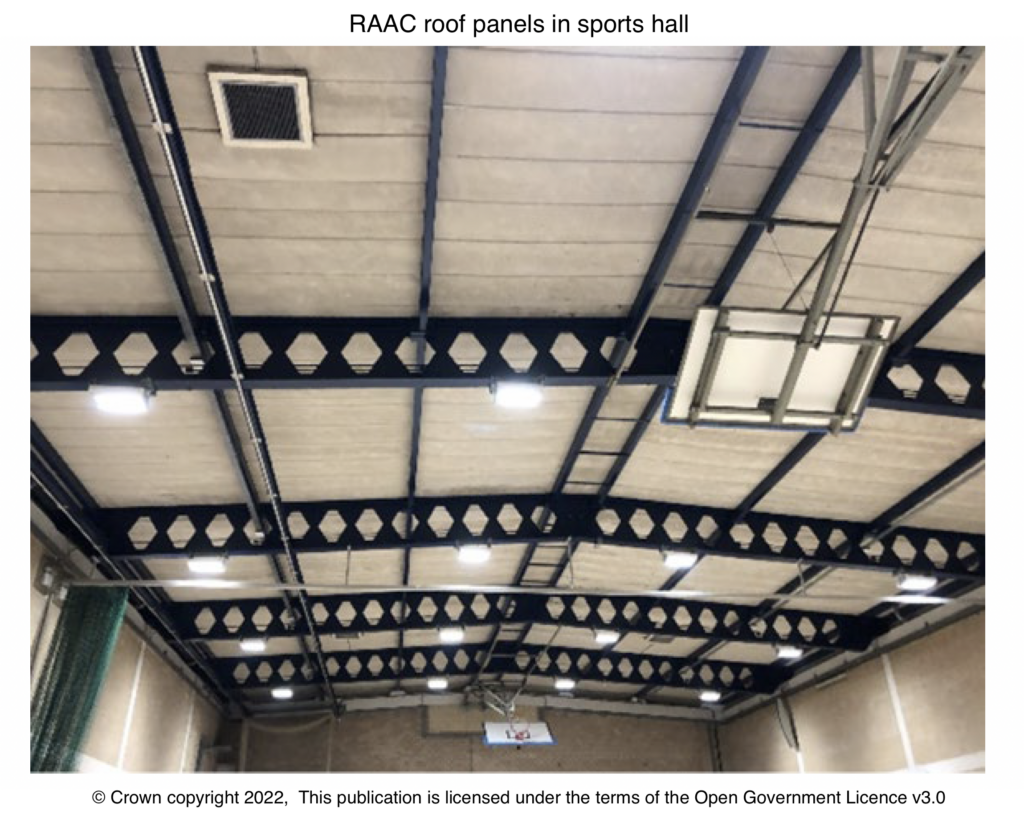
Because of its light weight, it was often used to construct flat roofs but can also be found in floors, walls and cladding (both interior and exterior), although it may only have been used in a particular area or section of a building not required to carry heavy loads. Examples of this can be seen in the images below.
Why has RAAC suddenly become a big issue?
Given its age, there has been concern about the condition of RAAC for some time, this is because many of the buildings it was used in were only expected to last about 30 to 40 years before needing to be replaced.
However, these buildings have remained in use well beyond (and possibly in some cases double) their designed lifespan.
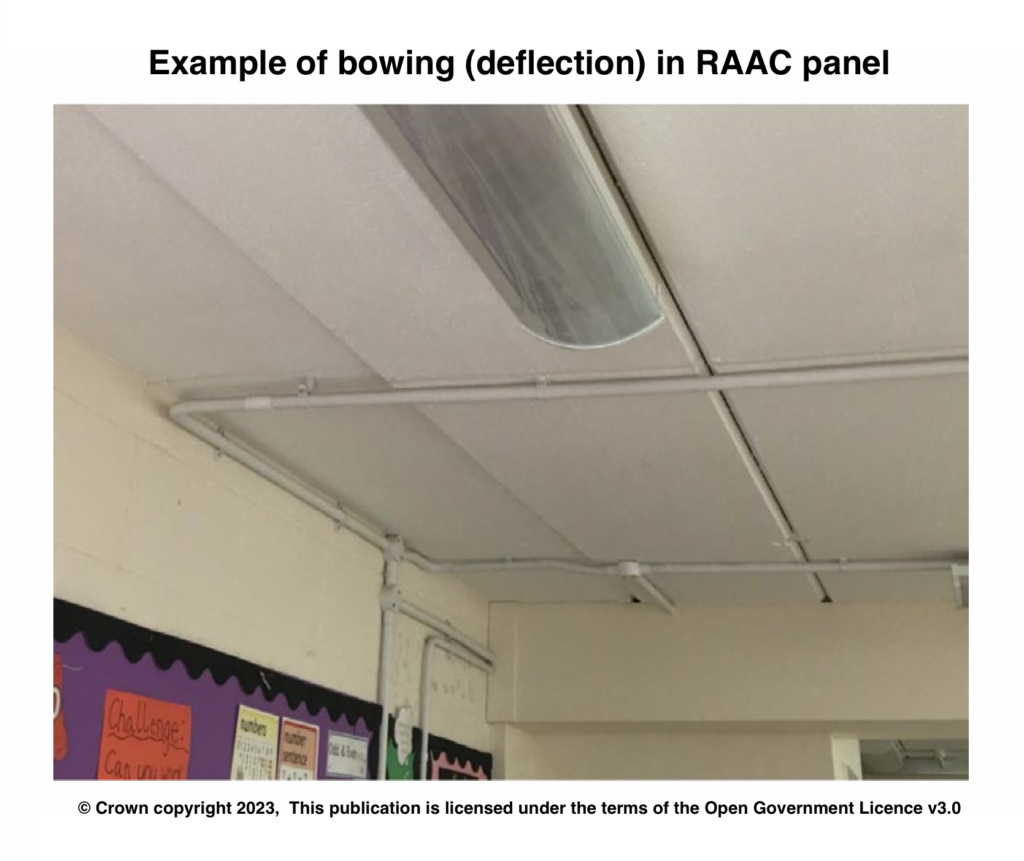
During the 1990s, the Building Research Establishment (BRE) advised that ‘structural deficiencies’ had been seen in RAAC planks showing bowing (deflection).
For many years, it was thought that any weakness would be able to be seen in advance of any problem. However, given the concrete is porous, moisture can seep into the concrete and over time this can weaken it. The moisture can also cause the steel reinforcement to rust and become brittle, therefore unable to continue to provide any strength or support.
In 2018, there was a collapse of part of a school roof, which had shown little to no sign of there being a problem. The Local Government Association (LGA) then issued an advisory to its members to check for RAAC in their buildings.
Additionally, other official bodies, such as Standing Committee on Structural Safety and Institution of Structural Engineers, have issued strong warnings and advice.
In late 2022, the Office of Government Property, whose role is to support government and the wider public sector to manage their estate, sent a ‘Safety Briefing Notice’ to all Property Leaders, regarding the dangers of RAAC. It stated: ‘RAAC is now life-expired and liable to collapse – this has already happened in two schools with little or no notice.’
The LGA then again contacted councils in relation to RAAC in schools, but to also remind them it could be found in all types of public building.
Then in August 2023, the government announced that something had happened over the summer where RAAC, which had previously been considered safe, subsequently failed, which prompted the need for immediate action. This expanded from schools to across all public buildings.
Finally, the government has started to pay attention to the issues and the risks of RAAC, which can no longer be hidden from the public or those who use buildings containing it and other hazardous materials.
What might have caused this change?
Buildings containing RAAC are already well past their designed and intended life. There has also been changes in weather over the years, which is also believed to have had an impact on RAAC.
However, over the last decade, despite knowing they have an ever-aging public estate, the government has chosen to reduce funding for public services. This has not only impacted on the delivery of core services, but also squeezed and potentially seen money diverted from the maintenance budgets to plug the funding gap for essential service.
That funding gap may quite possibly have seen those who are responsible for buildings, having to move funding away from preventative maintenance, like replacing material on a flat roof before it might leak (which might help to extend the building’s use further), instead shifting to only having funds to fix the roof when it leaks. This in turn will have had an effect on the RAAC materials themselves.
Are there any other safety concerns related to RAAC?
Yes, in addition to RAAC, asbestos was widely used both during and after the time RAAC was used, either as building insulation or for fire-protection purposes.
There is a legal requirement to manage the risk of asbestos exposure, and to regularly undertake an asbestos survey which records the location on type of asbestos, but also its condition.
Workers are entitled to see a copy of this survey, as well as to be told by their employer what steps they are taking to reduce the risk it presents and how to report any concerns.
Some building owners may have taken steps to remove the asbestos to prevent the risks. However, it may not have been possible to do this in some areas, due to its location being inaccessible.
The government’s current policy is that asbestos is ‘safe, in situ’, meaning asbestos-containing materials (ACMs) can be left undisturbed in their original location without posing a significant health risk. However, it does pose a risk should workers and occupants become exposed to these hazardous and potentially deadly fibres.
There are two main ways asbestos poses a risk in relation to RAAC:
- If RAAC materials fail, the resulting structural failures or damage could cause asbestos fibres to be spread over that location.
- As part of works to identify RAAC, asbestos could be disturbed, and workers exposed, if this work is not undertaken by a specialist in accordance with guidance issued by the Health and Safety Executive (HSE).
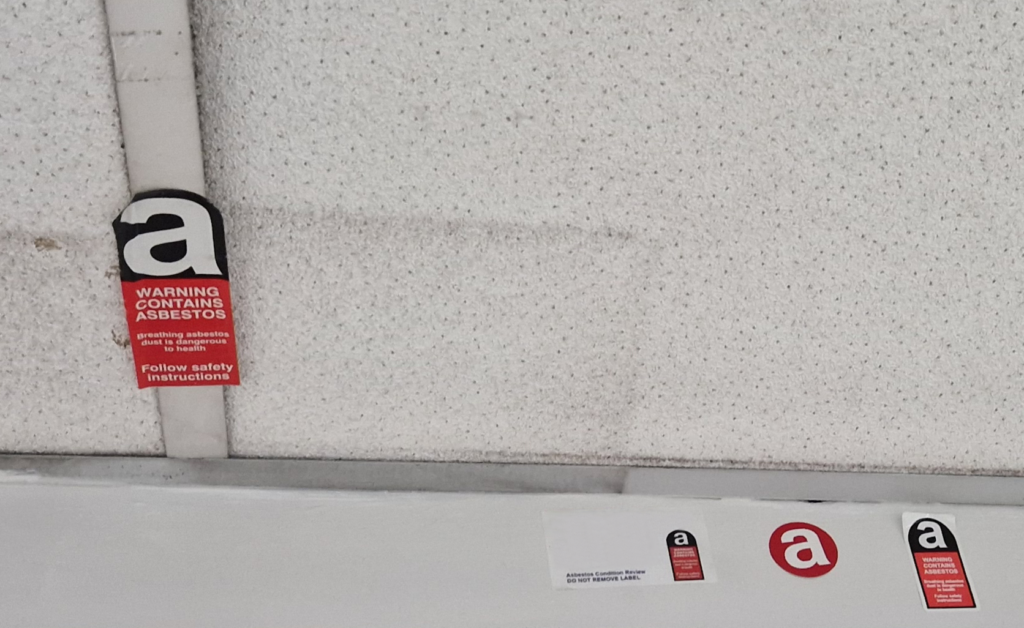
RAAC ceiling planks are often concealed behind false or suspended ceilings, which may comprise of, or be hiding, asbestos-containing materials, as can be seen in the image below.
What questions should I ask my employer?
With so much in the news about RAAC, it is understandable that members may be concerned about the risks.
It’s important to remember that not all buildings contain RAAC. It is mainly found in those build or renovated between the 1950s and 1980s.
Even if a building does contain RAAC, it does not automatically mean it will collapse, but your employer should tell you how they have assessed the risk and the steps they are taking to manage them.
Here are some helpful questions you can talk about with you fellow workers and consider asking your employer:
- Do we have Reinforced Autoclaved Aerated Concrete (RAAC) in any of our buildings?
- If there is RAAC in our buildings, can you tell me where this is and if this has been assessed by a specialist structural engineer.
- Has a risk assessment been completed, and if it has, please can I see as copy of it?
- Is there any asbestos in our buildings, and if there is, please can you tell me where this is, how this is being safely managed, and if there are any plans to have it remove?
- Are there any other building or safety issues that I should know about, and how should I report any concerns or changes in the building I might notice?
Legal disclaimer
The information contained within this article is not a complete or final statement of the law and is based on the laws of England, Wales, Scotland and Northern Ireland.
While UNISON has sought to ensure that the information is accurate and up to date, it is not responsible and will not be held liable for any inaccuracies and their consequences, including any loss arising from relying on this information. If you are a UNISON member with a legal problem, please contact your branch or region as soon as possible for advice, or for non-employment matters call UNISONdirect.